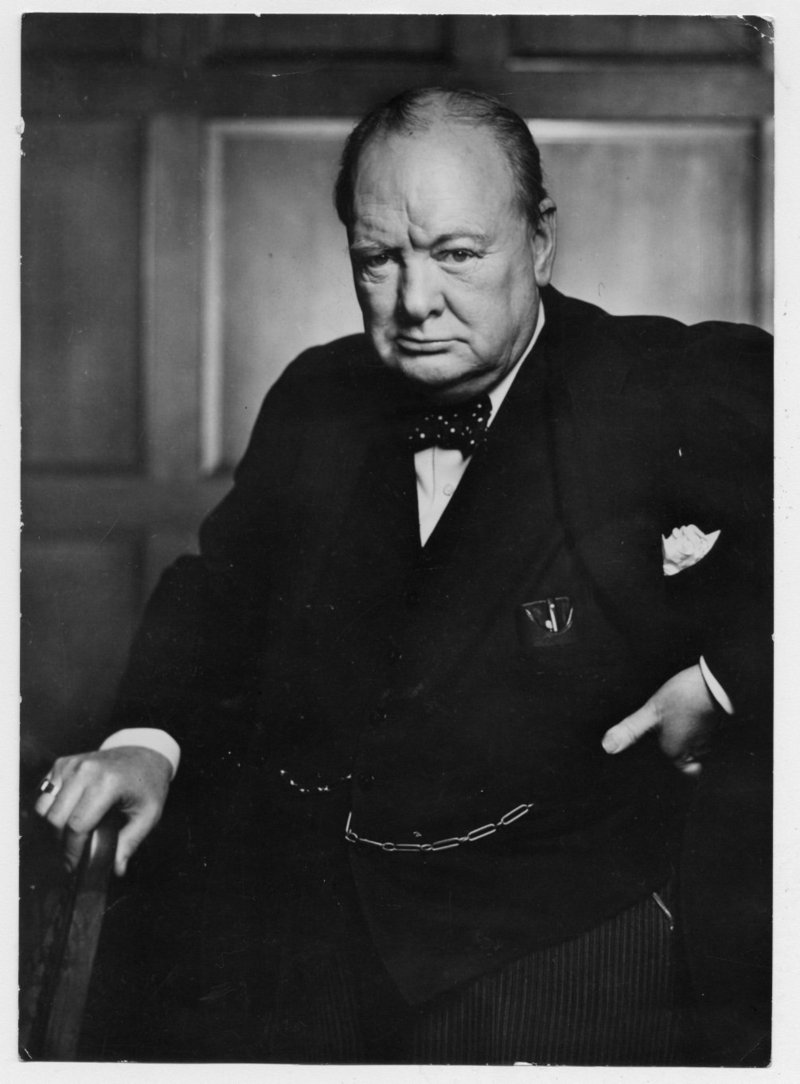
The Coalition Considers the Fiefdom Treatise Author a 21st Century Churchill
© 2009 Brad Kempo B.A. LL.B.
Barrister & Solicitor
Sir Winston was laughed at, derided and politically marginalized and the cost to humanity was gargantuan in the extreme. From the receptivity the Custodian Chief Executive received during the two-year dissemination process, history is repeating itself.
Sir Winston was laughed at, derided and ignored – and the cost to humanity was gargantuan in the extreme. From the receptivity the Custodian Chief Executive received during the two-year dissemination process, history is repeating itself.
It’s fair to infer that in some quarters of the coalition membership there was doubt when first approached that the intel on China and especially Canada was inaccurate. However, upon closer inspection the same signs that Churchill saw were present; and as a consequence the community of democracy, rule of law and human rights advocates exploded in 2007. And it kept growing in 2008 and 2009.
In late August 2006 the Fiefdom treatise author reviewed what occurred immediately prior to the Second World War – the bloodiest and costliest conflict in the 20th century – and put on the diplomatic record his belief that the China-Canada military alliance was just like Germany in the late 1930s. Fortunately for humanity, his findings were embraced.
When he witnessed his and his international clients, colleagues and associates’ concerns and fears falling on deaf ears, he took strength from the iconic statesman:
Gaining Strength from Sir Winston Churchill in Managing Successive
Failure from the Last Democratic Fiefdom
© 2005 Brad Kempo B.A. LL.B.
Barrister & Solicitor
In the April 2003 edition of Vogue Magazine, Sir Winston Churchill is quoted as remarking what his definition of ‘success’ is:
“Success is going from failure to failure with your enthusiasm still in tact.”
Two years after publishing the chapter infra on Churchill a coalition partner* described his academic capabilities as constituting ‘peripheral vision’ – seeing threats in the future that are not observable to the untrained eye; ones that can are insidiously evolving and only visible amongst disparate facts and circumstances when employing the most sophisticated academic methodologies of research and analysis.
* Uber-Genius Aaron Sorkin: The Importance of Academic Peripheral Vision to the See Threats Coming Before They Materialize [November 20, ‘06]
There is already a measure of vindication for his January 2005 conclusions and predictions. It’s now evident that the threat Chinada poses has been morphing. First was the assassination of an innocent American on August 9, 2008, during the first full day of the Beijing Olympics. Within a month Canada’s now constitutionally and internationally delegitimized federal political leader intentionally launched his election campaign in western Canada’s largest Chinese military hub to send a bellicose message to the coalition that the country would remain a base of global hegemony operations for the imperialistic Asian country.
In 2009 there was a distinct change to a more threatening tone in the diplomatic corridor:
How Sir Winston Churchill Contributed to Deconstructing the Last Democratic Fiefdom
© 2004 Brad Kempo B.A. LL.B.
Barrister & Solicitor
In Commonwealth and 20th century world history, one individual statesman stands above the rest when the question is asked, “Who repeatedly warned a pacifying humanity of emerging evil not once but twice, and was ignored at the greatest of peril and cost?”.
Sir Winston Churchill stands out in the last century after the world was lickings its World War I wounds and seeking to heal and move on. While the Prime Minister of Great Britain was appeasing Hitler, the junior Parliamentarian continued to hammer the Chamberlain government with his speeches about the impending doom should Nazi Germany’s militarization not be effectively countered. It is precisely because his Hansard warnings went unheeded that history remembers and admires him.
In Churchill: A Biography, (Farrar, Straus and Giroux, New York 2001), Roy Jenkins titles the relevant paragraph accordingly. In the paragraph “An Early Alarm Clock”, he writes, beginning at page 476, of the future Prime Minister and military strategy icon:
Churchill’s speeches of warning during the middle 1930s concentrated upon the threat of German air superiority. There was indeed some danger that, curiously in concern with Baldwin (who was at pains to stress that ‘the bomber will always get through’), he may have weakened British will to resist by exaggerating the vulnerability of London and other cities to devastation from the Lufwaffe. This reached its highest point in his House of Commons speeches in 1934. On 30 July he spoke of London being ‘the greatest target in the world, a kind of tremendous, fat, valuable cow tied up to attract the beast of prey’, and on 28 November, the metaphor was less vivid but the prophesy of doom was still more apocalyptic:
However calmly surveyed, the danger of an attack from the air must appear more formidable … so one can doubt that a week of ten days’ intensive bombing attack upon London would be a very serious matter indeed. One could hardly expect that less than 300,000 or 40,000 people would be killed or maimed. The most dangerous form of air attack is … by incendiary bombs.
[…]
Then he widened the scope of the possible terror:
It would not be supposed that the danger … would necessarily be confined to London… Birmingham, Sheffield and the great manufacturing towns should all be made the object of special study… The danger which might confront us would expose us not only to hideous suffering, but even to mortal peril, by which I mean peril of actual conquest and subjugation […] We cannot possibly retreat. We cannot move London. We cannot move the vast population which is dependent on the estuary of the Thames. […]
This November 1934 speech, one of a series concentrated on the air challenge of Germany which Churchill delivered around this date, was perhaps best received.
It is the same geo-political sentiment the Canadian arrived at when simply seeking evidence to further incriminate the Liberals in the worst human rights violations since the Nazis, ironically enough. He had no plans to find more defendants in the law suit. He simply mined the evidence like a skilled attorney and trained and experienced political philosopher. The culprits could have been the Russians or from Liechtenstein for all he cared!
But being China, still mired in a civilized-world-outlawed totalitarian regime; seeking an aggressive societal expansionism under a sheep’s skin not witnessed since the Cold War; boot-strapping both capitalism’s and democracy’s historically hard fought gifts to humanity to one-up the West militarily; and seeking to do so via the American’s softest underbelly, Canada, and the evidence was never contradicted, the Canadian made the same call Sir Winston did about the last democratic fiefdom. And the President of the United States agreed.
In a Public Broadcasting Station (PBS) special entitled “Churchill”, airing Monday, December 20, 2004, the Canadian was amazed several times over at how many parallels existed between his assessment of the Chinese-Liberal threat and that of both Hitler and the post-World War II Soviet Union.
Narrator: Churchill had already begun to recognize a new threat to Britain’s position as a great power. At the Big Three Conference in Tehran six months before D-Day, Churchill realized his allies America and the Soviet Union were directing the course of the war.
A new world order was emerging. Churchill was determined to preserve Britain’s power after the war and to win a role for himself in the Cold War he foresaw.
Churchill: Here we might pause in thankfulness and take hope. Hot only for victory on all fronts but also for a safe and happy future for tormented mankind.
[…]
Narrator: Churchill used the stage [during his tour of the world after the war to demonstrate his resilience and pre-eminence as a world statesman.
At his Fulton College Speech in Fulton Missouri, Churchill said to a very large audience:]
Churchill: From Stetting [sic] in the Baltic to Trisect in the Adriatic, an Iron Curtain has descended across the continent. Behind that line, lie all the capitals of the ancient states of central and eastern Europe. To all those famous cities and the populations around them lie in what I must call ‘the Soviet Sphere’.
George Elsey, Duty Officer, Whitehouse map room:
Churchill’s Iron Curtain Speech in Fulton Missouri was quite a shock to a percentage of the American people. We won the war with the British and the Russians, and then all of a sudden…”bam” all of a sudden here comes [the] Prime Minister talking about the Soviets in a way that was… a surprise… and a shock.
It was no shock in Washington; no shock whatsoever to the State Department or the military or anyone who was following current events. It was a shock to the American people. Lot of debate; a lot of criticism of Churchill.
[…]
Narrator: Churchill had heralded the Cold War. Many in America and Britain felt about that in dangers of Soviet Communism simply confirmed he was a war monger. But Churchill had believed the only way to contain Soviet expansion was to cement the alliance between Britain and the United States and make a settlement with ‘Soviet’ Russia.
“We hold the power to save our future,” [Churchill said].
Churchill: New men have obtained absolute power in Moscow. Is there a new breeze blowing on the tormented world?
Narrator: Seven years after his Iron Curtain speech at Fulton, Churchill at last saw a real opportunity to broker a peace summit between America and the Soviet Union. […]
Guest voice: Churchill was left to brook on the horrors of the atomic bomb. “That bloody invention’, [he used to call it].
[Edited insert of Nevada Desert test] “Boom”
Gst speaker: He didn’t underestimate it. He thought it pretty final; particularly the nuclear weapon the hydrogen bomb … which absolutely struck him dumb. …. Enormous power.
Jane Williams, personal secretary states:
He said they could wipe out the whole world and this is what we have got to protect. And it can be done; by talking; and negotiation; and diplomacy; but not through war.
For serious Fiefdom treatise students, multiple parallels between the current circumstances as described in these three volumes and what Churchill, Britain, the United States and humanity faced both as Nazi Germany rose to attempted global hegemony and then after its costly defeat the Soviet Union threat must stand out.
Where the commentator notes how Churchill sensed a “new world order was emerging” immediately preceding the invasion at Normandy as it related to the geo-political alliances forged from Nazi containment dynamics, here over half a century later that same macro-evolution takes a different form but with the same foreseeable consequences. Where Soviet communist expansion seeking global hegemony was the eco-military concern in the last century, that same threat lurks insidiously behind an ideological blind spot in the 21st; one as is indicated by a Whitehouse insider about the Soviets known only to well by Washington, the military or, like the Canadian sitting in the Article 7 box created by the continent’s nemeses, “anyone who was following current events”.
The parallels between a ‘Sovieted’ Russia and a ‘Chinesed’ Canada are striking. The new men having obtained absolute power in the middle of the fifties finds not that identical set of facts today; but rather a matrix of dynamics that geo-politically could lead humanity to what Churchill repeatedly called that ‘”tormented” place that humanity has gone to in the past. Absolute power already firmly established in China and with it now demonstrated through a torture-experiment-enslavement compelled, but nonetheless strict academic, evaluation of Canadian history the Liberals created that paradigm of governance under the public radar here with that country’s government and military as well, the hypnotic-based disruption tools of cognition become the 21st century equivalent of the last century’s now contained Pandora’s Box.